Citizens For Great Falls
Newsletter
| |
Volume 1; Issue 2;
August 2025 | | | (Above) An Exhibit Attached to Determination Letter | Zoning Administrator Issues Determination on Georgetown Pike Pickleball Court
Following a July 7, 2025, request by the attorney representing the property owners of 9511 Georgetown Pike, Fairfax County’s Zoning Administrator issued a ten-page Zoning Determination that supports their request to allow a pickleball court and proposed detached pavilion to remain in their front yard. This determination was issued despite opposition by neighbors and Citizens For Great Falls and their submission of research concerning the disturbing sound created during pickleball games. More than 100 people joined a petition to support the neighbors, urging Fairfax County to update its Zoning Ordinance and standards for noise enforcement to prevent poorly sited pickleball courts.
This controversy has gone on for more than a year and involved successful enforcement action against the property owners who were determined to have violated the county’s ordinances and for their failure to obtain the required permits before the construction of two lighted pickleball courts in the front yard of their residence. Despite those zoning enforcement violations being upheld by the Board of Zoning Appeals, the property owners assured county staff in meetings that they would diligently address the violations related to unpermitted work and land disturbance in building the two courts. Their attorney provided assurances to zoning staff that the residents would take steps to remove all online webpages, social media accounts, or postings advertising the property as an outdoor commercial use—factors that were raised during the enforcement proceedings.
Specifically, the determination cites the proposal to remove one of the pickleball courts and portions of the 10 foot fence closest to Georgetown Pike (Refer to grey shaded area of blueprint depicted above), as well as the removal of all four existing 20-foot-tall light fixtures. Two of the four basketball standards that were previously built on the site will be removed, according to the determination; however, two will remain in place. Essentially, as a part of an arrangement worked out between the zoning staff and the resident’s attorney, the front court that was within the front setback of the property and its fencing and lighting will be removed to bring the facility into compliance with zoning standards as a by-right project.
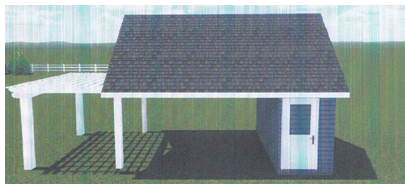
Also, as a part of this determination, zoning officials concurred with a plan to construct a pavilion adjacent to the pickleball court next to the residence that would be used as an outdoor recreation space. The pavilion (See artist rendering below) will contain a bathroom equipped with a toilet and sink as noted in the Use Determination letter.
Fairfax County Zoning Regulations require that an accessory structure and use, such as the pickleball court and proposed pavilion, must be subordinate in purpose to the principal structure and use on the lot and contribute to the comfort, convenience, or necessity of the occupants, business, or industry of the principal structure or principal use served on the lot.
The determination states that it was based upon facts presented by the attorney representing property owners and the applicable Fairfax County Zoning Ordinance provisions in effect at the time the determination was issued. There is no indication in the determination letter that any of the research, including scientific evidence of the harm caused by pickleball noise, submitted to the zoning administrator by neighbors who oppose the project, was considered. CFGF views this process as insufficient and imprudent in that staff should consider all relevant facts and circumstances brought to their attention, either by the property owner submitting the request or neighbors who will be affected by the decision.
Now that this determination has been issued, the zoning administration has stated that on receipt of the determination and provided they pursue steps to bring the facility into compliance, the property owners at 9511 Georgetown Pike will also withdraw their special permit application. As to the neighbors, who have objected to pickleball courts, should they desire to do so, they may file an appeal of the Zoning Administrator’s determination within thirty days of the date of its issuance. To date, no plans have been submitted for grading or land disturbance, according to sources in the county land development services department.
|  | CFGF Back-to-School Message Sent to
Forestville ES Community
In time for the opening bell of the 2025-2026 School year, CFGF President John Halacy sent a welcome message for all new and returning students and parents to Forestville Elementary School. The message was submitted in accordance with Fairfax County Public School Policies governing requests for the distribution of messages by a non-profit organization to the school community. It was prompted by a recent disclosure of recommendations by members of the Boundary Review Advisory Committee to remove Forestville Elementary School from the Cooper MS and Langley HS Pyramids.
In the message, CFGF extended best wishes for a successful start to the school year, noting that the beginning of a new academic year brings opportunities for students, parents, caregivers, and teachers to meet new classmates, discuss summer experiences, study subjects, and participate in after-school activities, and that Citizens For Great Falls is a local non-profit organization consisting of residents who support the community and its schools. Halacy noted the importance of the connection between the community, families, and schools, and how CFGF aims to contribute positively to our school system.
CFGF are committed to supporting the Forestville Elementary School community by keeping parents and students informed about discussions involving any proposed changes to school boundaries. The message reiterates that CFGF’s position is that Forestville Elementary School should remain within the Cooper Middle School - Langley High School Pyramid and that CFGF remains in opposition to changes to current boundaries that would disrupt Forestville Elementary’s community.
Distribution of the message will be subject to approval by Forestville ES Principal.
| CFGF President Warns About Safety Concerns:
New Walker Road Bridge
As a principal of Citizens For Great Falls who has previously engaged with VDOT, current and former Dranesville Supervisors, our State Senator (present and past), State Delegate, Virginia Highway Commissioner, Virginia Transportation Secretary, the Governor, and the late Congressman Connolly regarding the Walker Road bridge replacement project, CFGF president John Halacy posted his concerns about the safety conditions associated with the new bridge.
In his post, Halacy stated that his primary concern regarding the replacement of the existing smaller bridge with a significantly larger structure continues to be safety. He described the risks associated with the removal of the yield sign at the bridge and the addition of wider two-way traffic lanes which will likely result in increased vehicle speeds, a determination supported by Federal Highway Administration findings indicating that wider roads tend to encourage higher speeds.
He expressed disappointment that community concerns and those raised by elected officials were not ultimately addressed by VDOT and their bridge consultant. The potential for higher speeds approaching the sharp curve at Walker Mill Road just north of the bridge raises substantial safety concerns due to the increased risk of accidents and a prior history of accidents at this intersection. It has been described to officials as a zone of conflict.
Now that the bridge is open, Halacy urges all drivers to exercise caution when crossing the bridge, particularly when traveling northbound or southbound into the pronounced curve at Walker Mill Road. | School Boundary Review Developments:
Fairfax County Community Input
and Schools’ Redistricting Process
Following a July 29 meeting of Citizens for Great Falls (CFGF), CFGF President John Halacy and Vice-President Manny Dacoba commented on the ongoing issues surrounding school boundary policies in Fairfax County Public Schools (FCPS). Halacy noted that the massive Fairfax County school system faces ongoing challenges in formulating policy on school boundary adjustments, largely due to the conflicting expectations of parents and school administrators.
As the ninth-largest school system in the United States, serving over 181,000 students across 199 schools and centers, making significant changes within this large organization requires three main components: strong leadership from the top, clear communication, and stakeholder engagement. To date, there have been concerns that FCPS has not fully achieved these elements in relation to its proposed school boundary policy changes.
While the proposed revisions to School Board Policy 8130 on Boundary Determination introduced important goals of equitable access and efficient resource allocation, the persistent lack of transparency and true stakeholder engagement, coupled with clear and consistent communications from the top, have ignited justified concern among parents and community stakeholders.
The CFGF leaders underscored the importance of getting answers to critical questions regarding the redistricting initiatives especially as the goal of this process was to create equitable opportunities. They noted that it is clear that mere boundary adjustments, alone, will not resolve the underlying systemic challenges plaguing some of the county’s documented underperforming schools, particularly in the face of reduced Federal funding.
CFGF emphasized a key consideration in getting this done right is to ensure the transparency of the redistricting procedures and the activities of the Boundary Review Advisory Committee (BRAC). The requirement for BRAC volunteer members to sign Non-Disclosure Agreements (NDAs) raises questions about the extent of community participation and access to information and stifles the flow of communications.
While maintaining the confidentiality of student records is essential, public policy matters are generally expected to be open to public review. There are also questions regarding the composition of the BRAC. Since the original BRAC parent or caregiver members were randomly selected, it is important to understand how many have been replaced due to withdrawals or absences, as well as the process by which new members are chosen.
Furthermore, a surprise announcement in June of a $150 million acquisition of the former King Abdullah school demands urgent clarification. Especially, as the county prepares for a referendum on the November 4 General Election, where a $460 million School Bond question will be on the ballot. Stakeholders deserve explicit information about future expenditures and how this facility will be integrated into the existing school system. Additionally, any overall decline in the mean SAT scores in Fairfax County, for example, should be considered along with immediate transparency regarding the interventions being implemented to address that issue.
Vice President Dacoba shared his concern over the absence of published progress reports from the advisory committee and that the FCPS’ tentative district scenarios made public have failed to offer adequate information driving proposed boundary changes, which hamper meaningful public engagement.
Dacoba also offered his reaction to the outcome of the July 2025 School Board Meeting, which discussed and adopted phased implementation strategies for boundary adjustments. He observed that while these methods aim to offer flexibility, they are complicated, and how they will play out remains to be seen. The policy implications for institutional capacity remain ambiguous, and providing the Superintendent with even more discretionary authority only intensifies these concerns.
Dacoba expressed concern that critical policy discussions were being made during the height of the vacation season while most are enjoying the summer break, but we should all be leaning forward in anticipation of the upcoming release of the school boundary scenarios and the opportunity to comment and offer community feedback on that product.
Halacy offered concluding comments by calling on the members of the School Board and FCPS Administrative staff to act now to bolster community trust in this process: “FCPS must prioritize transparency and genuine community involvement in all aspects of its processes. The public deserves to be fully engaged and informed; anything less is unacceptable.” | Volunteers are welcome
CFGF is an all-volunteer organization. We welcome the participation of our members and especially those who are interested in serving the organization in a leadership capacity.
There is one remaining vacancy on the Board is for the office of Treasurer. Until such time as that office is filled, the duties of the Treasurer will be performed collaboratively by the President, Vice President and Secretary. Monthly reports will be available to the members.
| Schools are Open! Drive safely! | (Above) Artists Rendition of King Abdullah Academy | Questions Surround the King Abdullah School Acquisition
Several questions were raised during a CFGF meeting concerning the acquisition of the former King Abdullah Academy by Fairfax County Public Schools and the process that was followed. When the decision to purchase the school was made on June 12 for $150 M, many in Fairfax County who had been following the year-long proceedings involving school boundaries and accommodating changing student enrollments were stunned by the announcement.
CFGF immediately reacted to the announcement, stating that the timing of this announcement was incredible for several reasons. For example, although the need for more high school capacity in the western area of the county has been under discussion for at least 20 years due to increased residential development and there has been ongoing debate surrounding the means to redraw school boundaries to address capacity issues, given the differences in enrollments throughout the county, the precipitous action to acquire a new facility has impact on the ongoing planning efforts that have involved the administration and the community members of the Boundary Review Advisory Committee (BRAC).
CFGF Vice President Manny Dacoba observed at the time that comments by some school board members suggest that the purchase price of $150M is a rare bargain. But he noted that the county continues to struggle to achieve a balanced budget. Further, he expressed concern that school administrators conducted this massive financial commitment without full public disclosure and debate, especially without including such plans in the current discussions with the Boundary Review Advisory Committee (BRAC) community members.
Both Halacy and Dacoba asserted that school board officials and Superintendent Reid do not operate in a policy and decision-making vacuum. Major policy choices like building new schools in our community or acquiring major new facilities should involve public engagement and not be decided behind closed doors. The community is eager to learn more about how this planned proposal will fit into the overall strategy for addressing school capacity issues, boundaries, and budget.
More recently, a CFGF member has been independently pursuing answers to procedural questions on the school acquisition, focusing on whether the county performed basic due diligence before committing to this purchase, which would include whether county officials also conducted a review of the conditions of the building beforehand. Importantly, he is investigating how the acquisition would fit into the financial plans and the Capital Improvement Plan.
Public comments have been made that the purchase price of $150M is a significant savings when compared to the School District Capital Improvement Program estimates that acquisition costs of land and construction of a new high school in western Fairfax County would total more than $430M. The CFGF member is continuing to request data from school officials on the details of the purchase and whether there is a formal report available on the pre-purchase inspection of the school property.
| 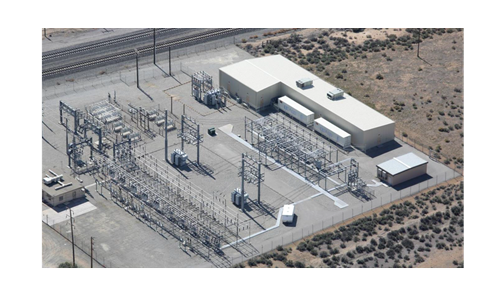 | | Depicted above is a Battery Energy Storage System with a Power Substation | CFGF Comments on Proposed Zoning Amendment on Battery Energy Storage Systems (BESS)
As noted in this month’s article concerning Dominion Energy’s proposed rate increase, data centers and their demands on the current infrastructure have opened up a new means to deliver energy—Battery Energy Storage Systems (BESS). CFGF recently submitted detailed comments to Fairfax County Zoning Officials in response to their announcement of a proposed amendment to address BESS. While these systems can support and enhance the distribution of energy within the grid system, the use of the Lithium-Ion batteries that are used mainly in BESS present well-documented risks of fire and explosion, with certain incidents demonstrating that such fires can be difficult to control or extinguish promptly.
CFGF raised caution about allowing BESS installations in densely populated areas due to the possibility that they may introduce unnecessary risk to local communities, particularly if permitted By-right. It is important to note that our community has commercial and industrial districts in proximity to residential districts. Because of that, CFGF has significant concerns regarding the anticipated expansion of BESS to those areas. The CFGF is especially concerned that, in addition to potential noise and environmental impacts associated with future BESS facilities, Fairfax County should be evaluating stronger regulatory measures, including additional possible restrictions within specific zoning districts.
According to the staff’s preliminary discussion draft, Dominion Energy (DE) has set a goal to develop or acquire 2,700 MW of energy storage capacity by 2035, with an additional requirement that at least 35% of this capacity be purchased. Moreover, many of the DE substations (potential sites for BESS) in Fairfax County are located near or within both commercial and residential areas. As a result, it is prudent to consider the potential community concerns that would arise regarding noise, pollution, and the documented fire and explosion risks associated with BESS using Lithium-Ion batteries.
Market indications confirm that BESS constitutes a rapidly growing sector, not unlike our experiences in Fairfax County regarding the emergence of data centers in Northern Virginia.
CFGF believes that the impending fast-paced development of BESS necessitates that this land use category requires a comprehensive understanding of the associated risks and the potential impacts on communities resulting from BESS deployment and more specificity in the zoning regulations.
Finally, at a minimum, CFGF opposes By-right approval of BESS in residential or commercial areas and recommends that all BESS undergo the Special Exception application process.
Public Hearings on the proposed amendment are reportedly scheduled for a date in Fall 2025. |  | | CFGF Urges Comments on Dominion Energy Rate Increase Request
The State Corporation Commission (SCC) is conducting a review of Dominion Energy Virginia’s 2025 biennial review of rates with a hearing scheduled for September 2, 2025, and invites public comments on the matter.
According to the SCC, Dominion states that its primary request is for an increase in revenue of $822 million for 2026, and a further incremental revenue increase of $345 million for 2027. Among other requests, the company proposes a new customer class for large-scale users of electricity, including data centers. In addition, the company proposes new minimum charges for large-scale users of electricity that are intended to protect other customers and the utility from the financial risk of nonperformance. Clean Virginia, a 501c(4) organization, reports that if these requests are approved, the average residential customer would pay an additional $21.43 each month by 2027, a 15% increase in electricity bills.
Several factors are driving the cost increases, according to Clean Virginia. Dominion is asking to raise its profit level from 9.70% to 10.40% because the company claims that it needs a higher profit level to attract investors for the projects it will be building to meet its increasing demand, which is mainly driven by data centers. In support of its rate increases, Dominion has argued that it must increase its generation costs to power data centers and to distribute electricity to the growing number of data centers. There is also concern by Dominion that, because of unpredictable fossil fuel prices, more than 80% of its proposed fuel charge is to cover those costs.
These costs represent another burden that residential customers must shoulder. It is well known that the demand for energy, mainly from data centers, is coupled with the delays in connecting new energy resources to the electric grid and the planned retirement of energy generation resources that are uneconomical or violate environmental rules are causing higher electric bills for customers and, according to Clean Virginia, would have been unlikely without the surge in data center demand.
CFGF members are urged to submit written comments to the SCC on this case by August 26. Reference Case No. PUR-2025-00058.
Commenters can use a form found on the SCC website:
https://www.scc.virginia.gov/case-information/submit-public-comments/cases/pur-2025-00058.html | The 2026 GA Legislative Session is approaching
The 2026 session of the General Assembly will officially open on Wednesday, January 15, 2026. However, legislative work begins much earlier when Senators and Delegates can pre-file legislation for consideration during the regular session. Pre-filing begins on Monday, November 17, 2025. As we know, the business of the General Assembly moves at a rapid pace with thousands of bills submitted to both houses.
CFGF has identified its topline initiatives on the CFGF website home page. For example, in matters of transportation, aggression on the roads is rampant in Virginia. Virginia still ranks in the top 10 states for the most speeding tickets in 2024 and Virginia is the only East Coast state in the top 10, with 6.6% of drivers reporting speeding tickets on their driving records. Police can't cover the network of roads in this county to effectively enforce traffic laws. Therefore, Automated Speed Enforcement technology has been gaining popularity in the General Assembly as one means to address speeding.
Another legislative topic is the looming prospect of a Northern Virginia Casino. At this point, another casino bill will likely be introduced during the 2026 session. Senate and House leadership, casino interests, and the developer planning to build a casino on one of his Tysons properties have shown no interest in withdrawing plans.
Great Falls is almost entirely dependent on private water wells for its supply of drinking water. Because of environmental threats, monitoring and protecting the more than 12,000 private water wells in Fairfax County that provide drinking water to households not served by public water systems is crucial. Because of the importance of assuring adequate and safe groundwater resources, legislative opportunities exist to strengthen state requirements for monitoring and testing.
Data Centers, as you have read elsewhere in this newsletter, are increasing in numbers and pushing closer and closer to residential districts. Unlike its neighbors, Fairfax County permits By-right development of data centers. Much more needs to be done to mitigate against noise and environmental impacts from diesel power generators that threaten the quality of life in our communities.
Plus, there are numerous local legislative issues that affect our community. These are issues of concern beyond those we have listed here that can affect your interests, e.g., stormwater runoff, flooding, zoning violations, tree and roadway maintenance by VDOT, crosswalks, traffic signalization and timing, safeguarding the historic and scenic Georgetown Pike, safety enforcement of heavy trucks and oversized vehicles, and occasional matters of public safety. Please let us know your concern and how you would like to become more involved in the effort.
CFGF Members with suggestions for legislative topics should submit their ideas now so that they can be developed for submission to the CFGF legislative agenda. |  | |